Standing in front of a supermarket shelf lined with dozens of bottles all claiming to be «extra virgin», spotting real quality can feel like a job for experts. It isn’t — four simple checks are enough.
Read the label before the price
Look for «single cultivar» (one olive variety, more traceable and distinctive) or the cultivar name itself. Look for the harvest date, not just the best-before date. And be wary of labels that simply say «blend of EU and non-EU oils» with nothing further.
Colour tells you almost nothing
An oil’s colour depends on the cultivar and the moment of harvest, not on its quality. A deep green oil isn’t automatically better than a golden yellow one — which is why professional tastings use dark glasses that hide the colour entirely.
Taste is the real judge
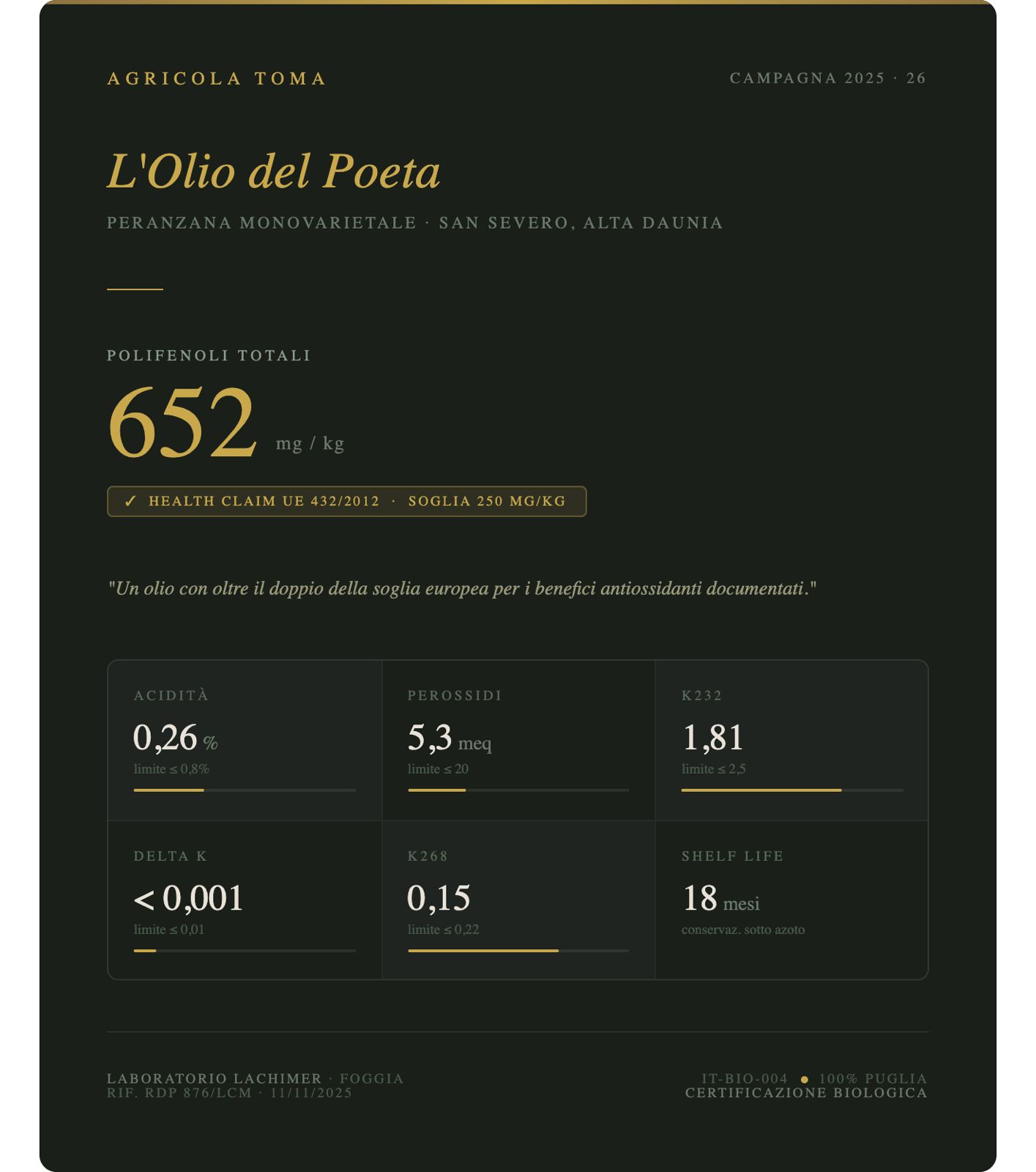
A good extra virgin has three recognisable notes: fruity (green or ripe), bitter, peppery. These are signs of polyphenols — an oil rich in antioxidants — not a flaw, as some assume.
The date matters more than the vintage
Unlike wine, oil doesn’t improve with age: it oxidises. An extra virgin should be consumed within 12-18 months of harvest, kept away from light and heat.
Our Olio del Poeta always carries lab analysis and harvest date on the label — because transparency is the first sign of quality.
Discover the oil→